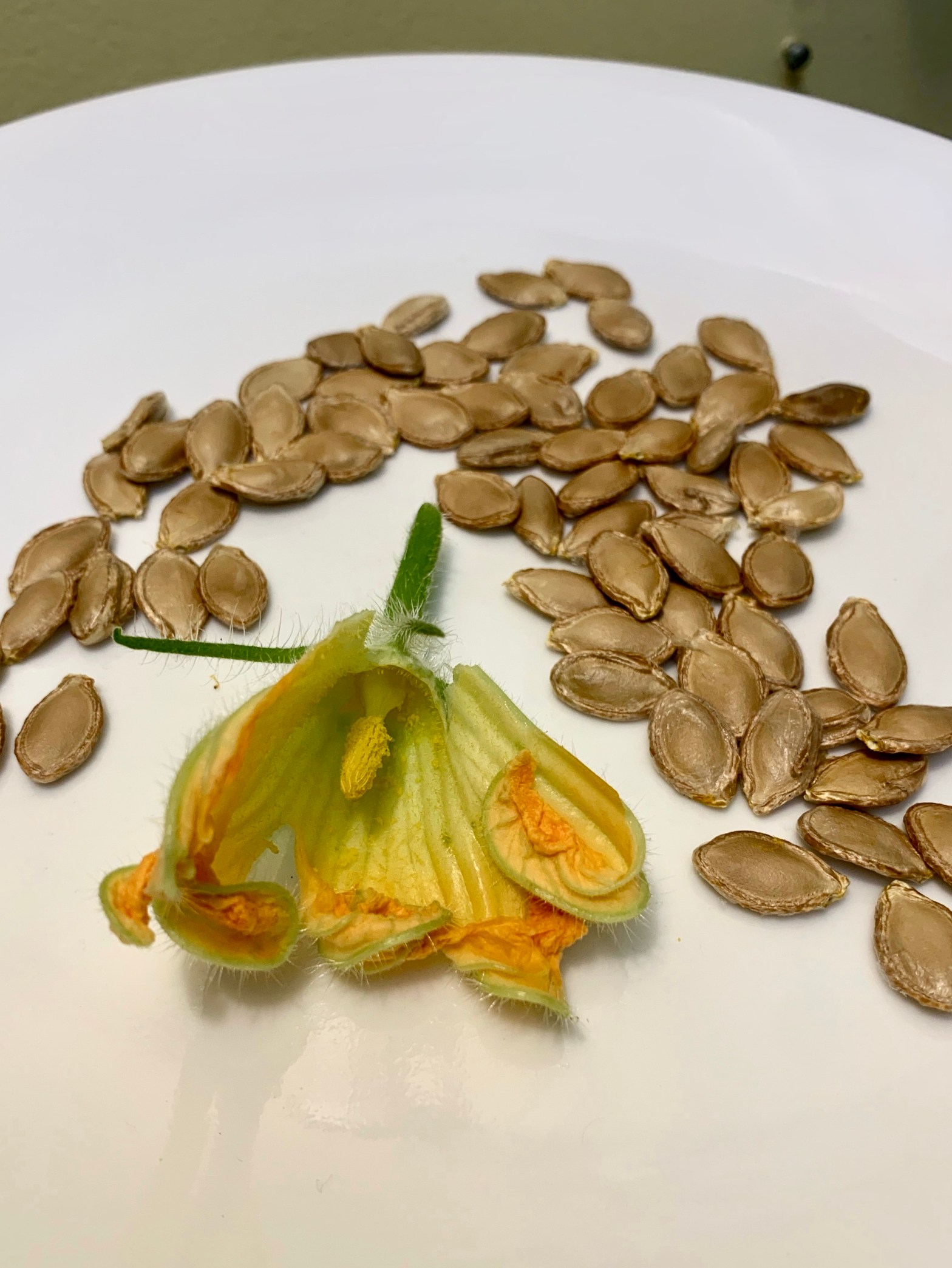
Assuming no frost, the production will slow, but all four of the tromboncino’s offerings will be available: Four? Summer squash and winter squash count as two. The flowers are enormous, and flowers are edible raw or as a tempura. Offering #4, probably ready within the squash harvested in August: Seeds. Seeds of many squash are good, and this plant’s seeds are exceptionally tender and easy to prepare. Hollow out the seeds in the usual manner, rinse off the slime, separate onto a microsofe surface, and give the two handfuls of seeds roughly 5-8 minutes in a microwave. Best to give them increment of two minutes, with a cooling minute between blasts. Or, the traditional oven method will work just as well, baked until slightly brown. Oiled or non-oiled, they are one of the best.
The March tromboncino
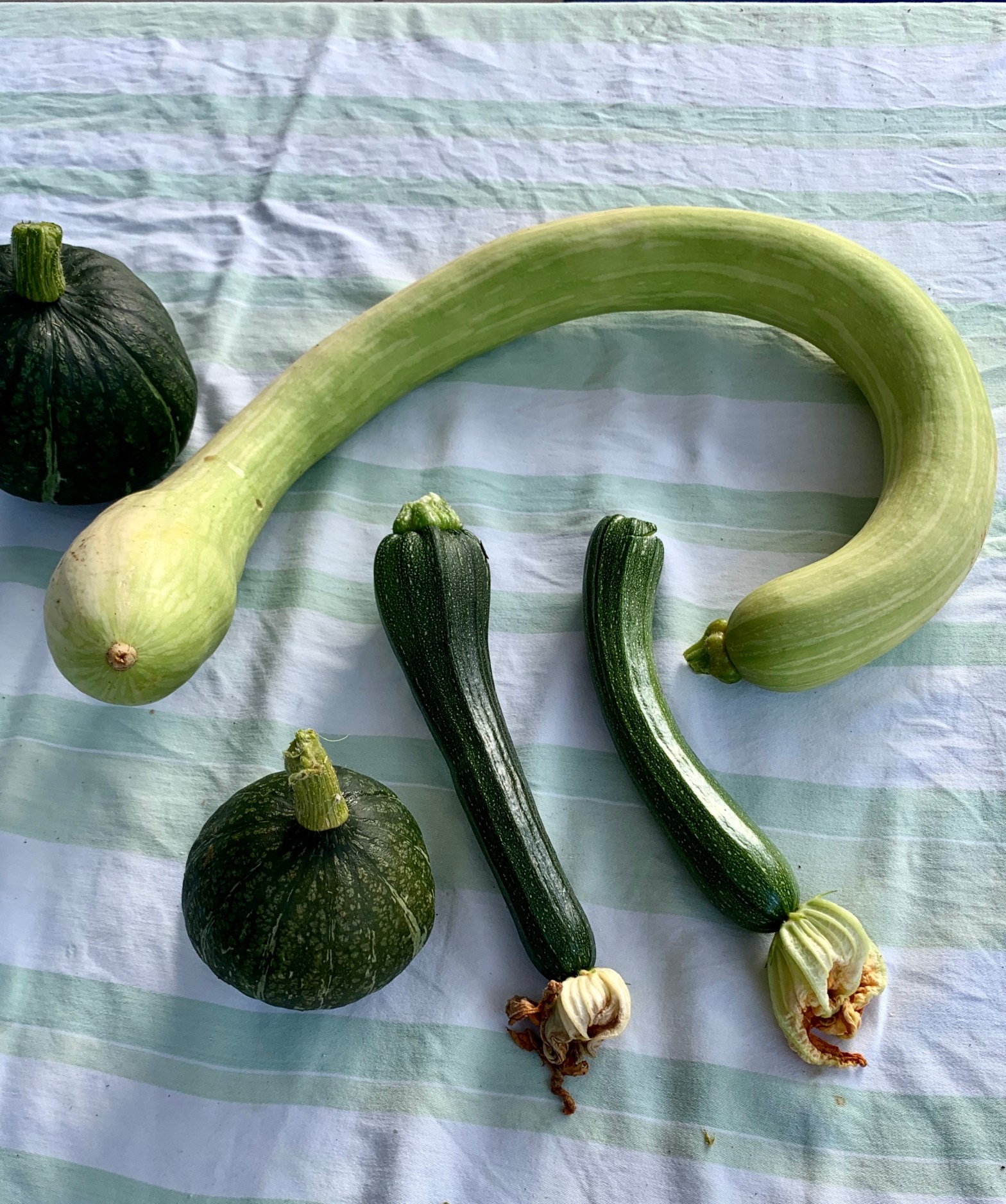
Back in August, these aggressive vines were producing too many summer squash to handle. Some grew to maturity, some two metres, some less. As their shell hardened in the sun, and as August became December, some were eaten. The remaining squash remain intact until when? Some have been dormant, and edible, for six months. The wait for a sagging squash continues, seeds have been saved, and the next generation will be planted in April inside, and late May outside.
The February tromboncino
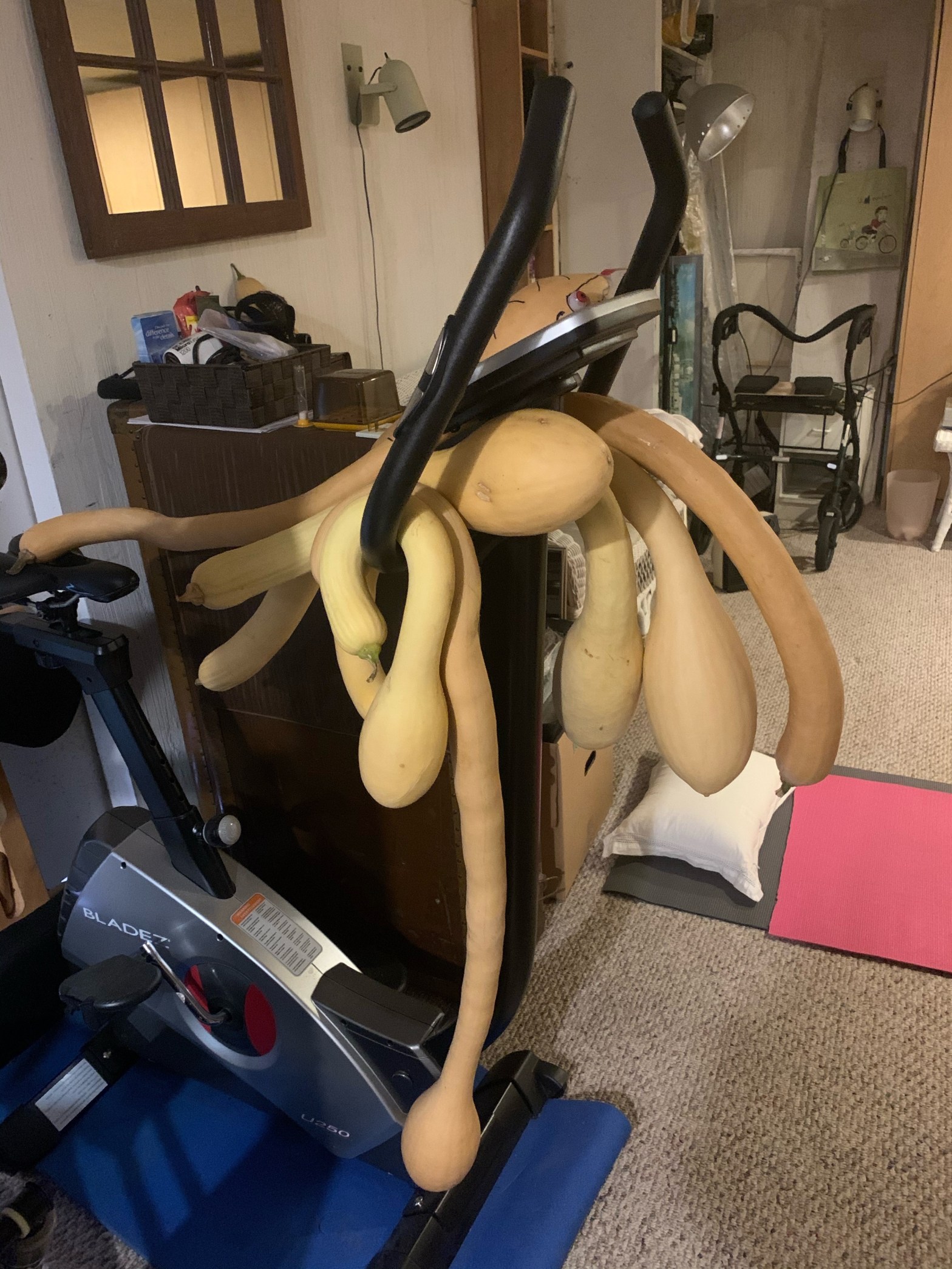
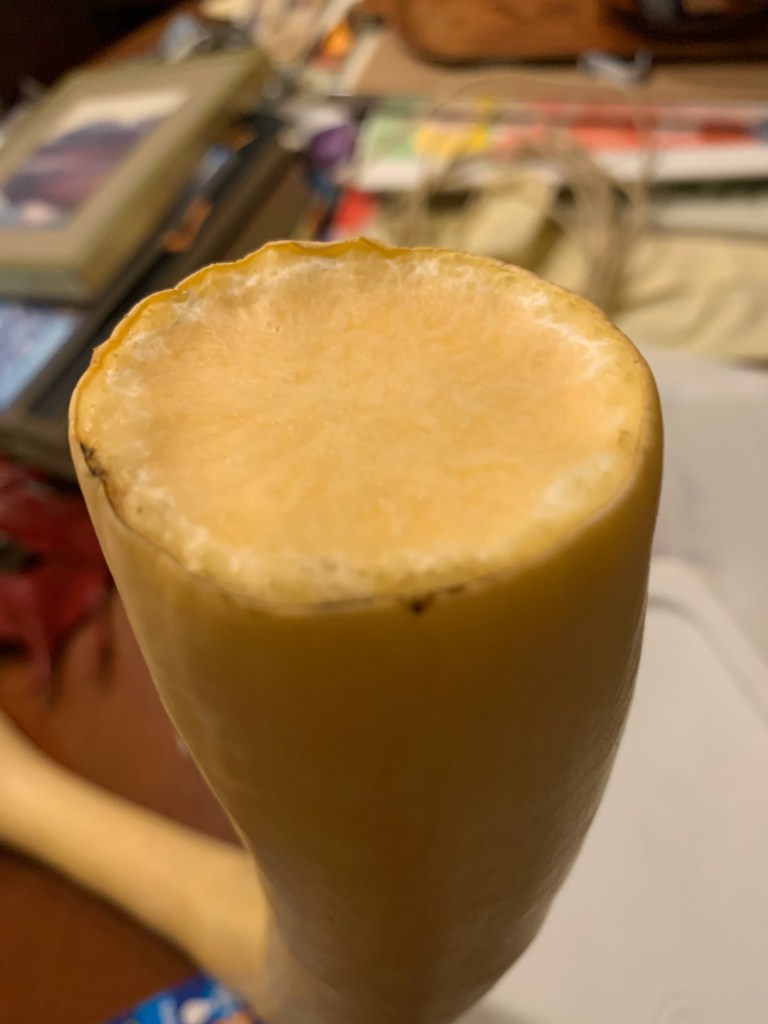
I trumpet its virtues: These are monsters stored for winter and none have shown signs of sagging. The secret is a tough outer skin, nature’s way of saving the seed for the warm soil of summer. Cut off a foot- long chunk of seedless squash, peel and cook. The remainder will self -heal.
September payoff
On the West Coast, powdery mildew is a barrier to zucchini production. Tromboncino not at all. Is it resistant to disease because it is in the heavens? It thrives. It produces giants. It branches up and out. Some of the flowers are grapefruit sized.
When two pollen-laden bumblebees delve into the male flower will they fight it out for the privilege of carrying their pollen to the female flower? (If in doubt, the concerned gardener can grab a pencil sized stick, and transfer some yellow gold pollen to the female flower, which is receptive for about 24 hours.)

The August Tromboncino
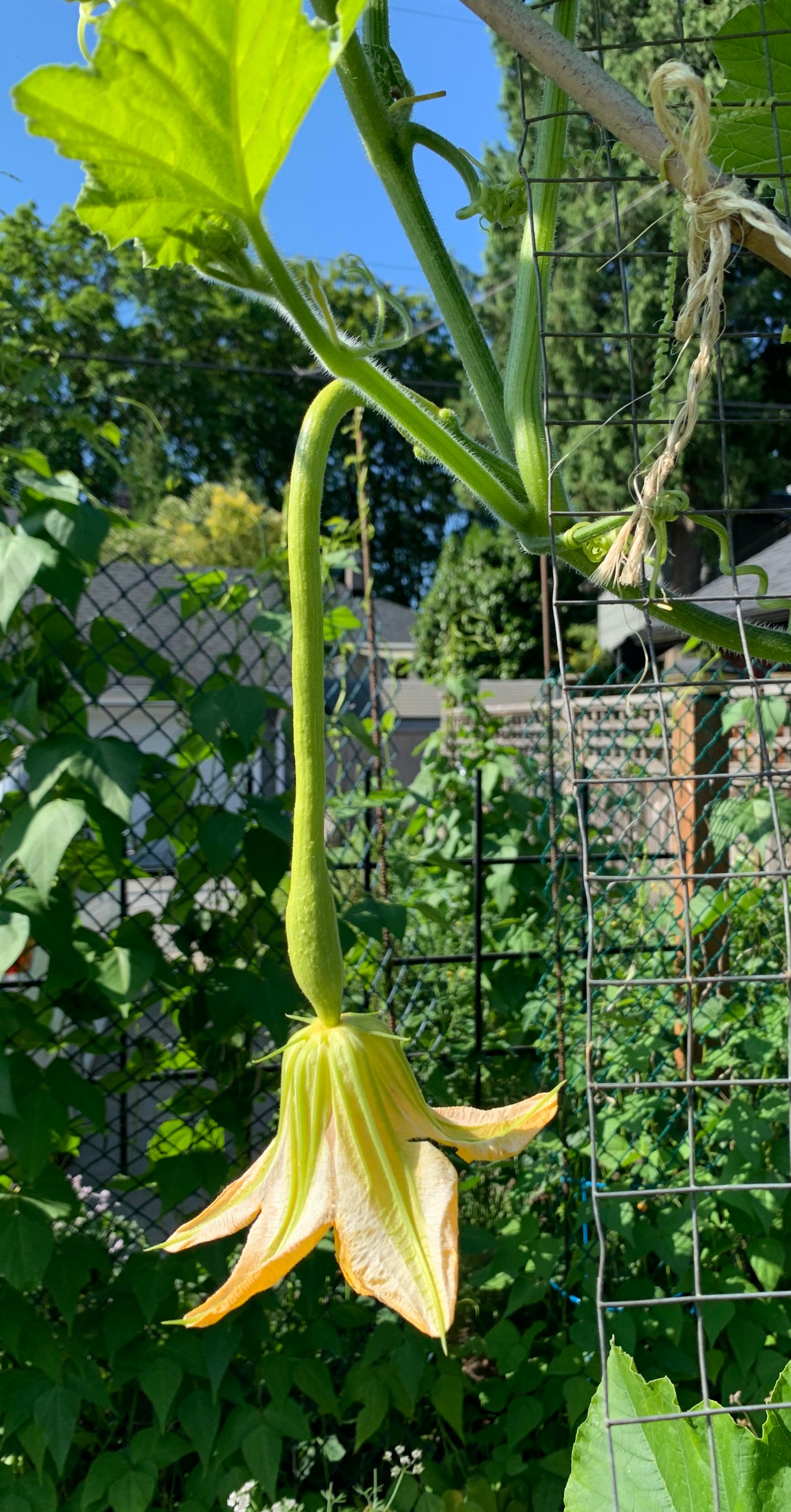
Although this climbing squash will thrive on the ground if given space, your baby tromboncino will need 4 meters (12 feet) of climbing space to thrive. It will keep growing until frost, and is more or less immune to the pests of zucchini, such as powdery mildew. Growing space can be horizontal or vertical, but the best is a combination. Once it reaches as high as you can , give it a horizontal path with a hefty string, pole, or bamboo stick. You will have plenty of summer squash during the high season, and you may think of winter squash. Once you let one of these babies mature, especially to the point of turning from green to yellow, then your production may decrease. Two plants, one for summer squash and another for winter squash, may help you have the best of both. Usually, you will have too many of both unless you have a large family.
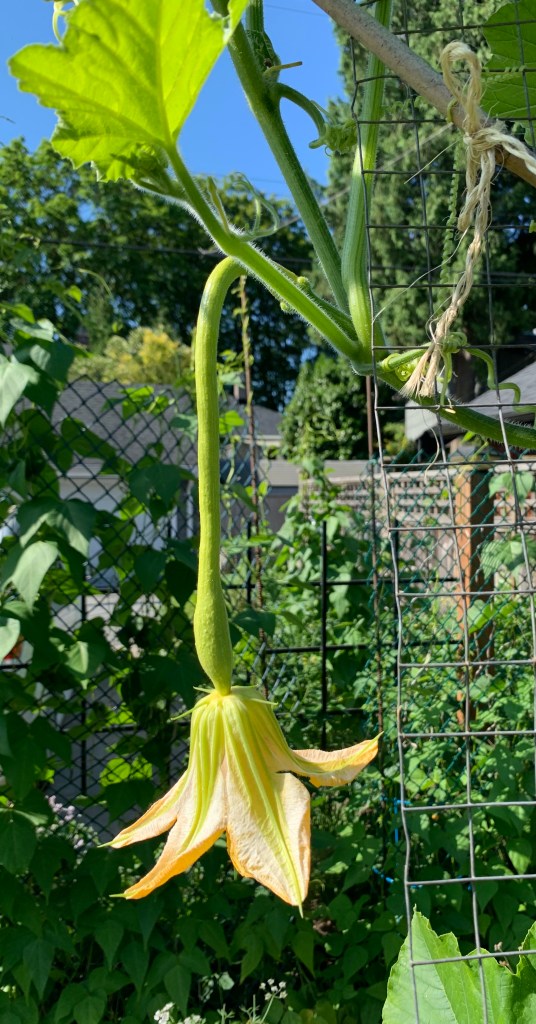
The summer tromboncino, one week after birth.
 Tromboncino 101